

 Login
Login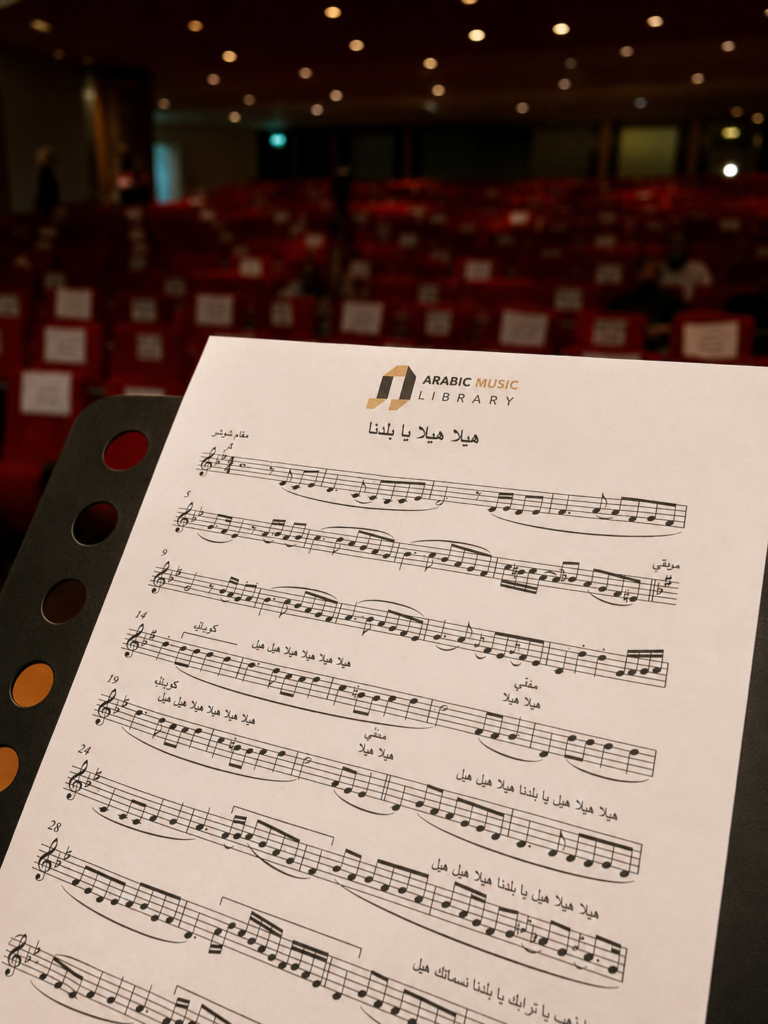
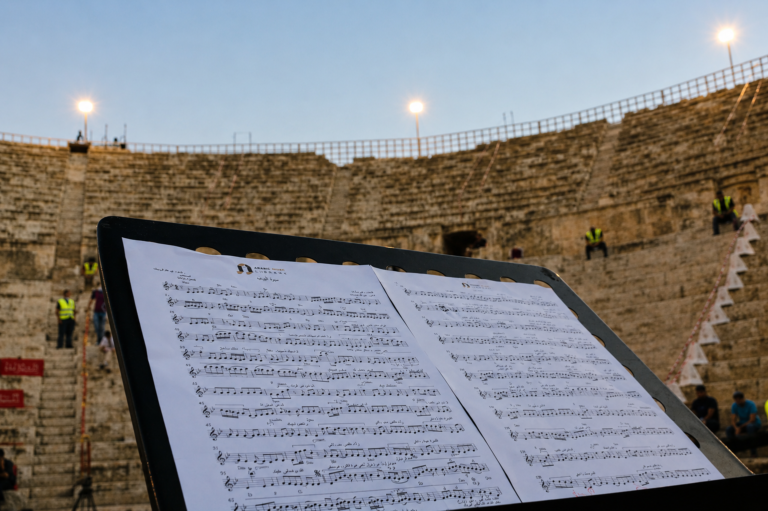
Musical notation is the written language of music — the means by which melodies are preserved and passed down accurately across generations. In Arabic music, notation does more than record pitches and rhythms; it also tries to capture what defines the Arabic maqamat, above all the quarter-tones that standard Western notation doesn’t natively express.
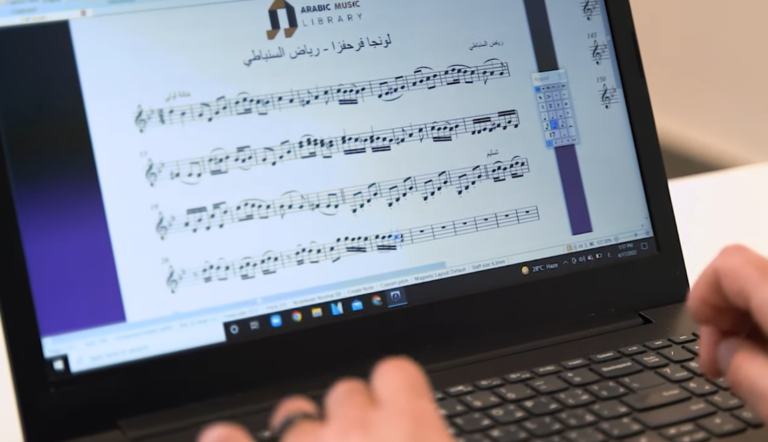
For centuries, this heritage was passed down orally, from teacher to student. But with the founding of the Arabic Music Institute in Cairo (the idea dates to 1914, with the institute officially opening in 1922), written notation began to take on a more organized form, using the Western staff system with added symbols for quarter-tones. As software like Sibelius, Dorico, and Finale developed, preparing and distributing scores became easier and more precise.
Why does musical notation matter? It preserves heritage for future generations, makes teaching music in institutes easier, allows works to be performed closer to what their composer intended, and gives ensembles and orchestras a shared reference.
Names that shaped this journey:
- Mahmoud Ahmed El-Hefny — the first to introduce music education into Egyptian schools, and author of nearly 45 books on music.
- Ratiba El-Hefny (1931–2013) — opera singer and dean of the Arabic Music Institute, and author of important documentary books on Abdel Wahab, El-Qasabgi, and Mounira El-Mahdeya.
- Gamal Salama (1945–2021) — the composer behind roughly 200 film, television, and theater scores, who left a handwritten archive of more than 200 musical scores.
- Selim Sahab (b. 1941) — conductor of the National Arabic Music Ensemble at the Cairo Opera House, and a music researcher and historian.
- Mustafa Saeed — founder of the Arab Music Archiving and Research Foundation (AMAR) in Lebanon in 2010, and winner of the 2024 Sheikh Zayed Book Award.
Challenges remain: original documented scores are scarce, improvisation and ornamentation are hard to notate precisely, there’s no unified standard for writing quarter-tones, and specialized digital libraries are still few — despite efforts like AMAR.
Ultimately, preserving Arabic music isn’t just about audio recordings — it starts with documenting it in writing, accurately and systematically. Notation remains the closest guarantee that a musical work survives as its creator imagined it.